bet247 Zimbabwe review: licence match, payments and complaint route
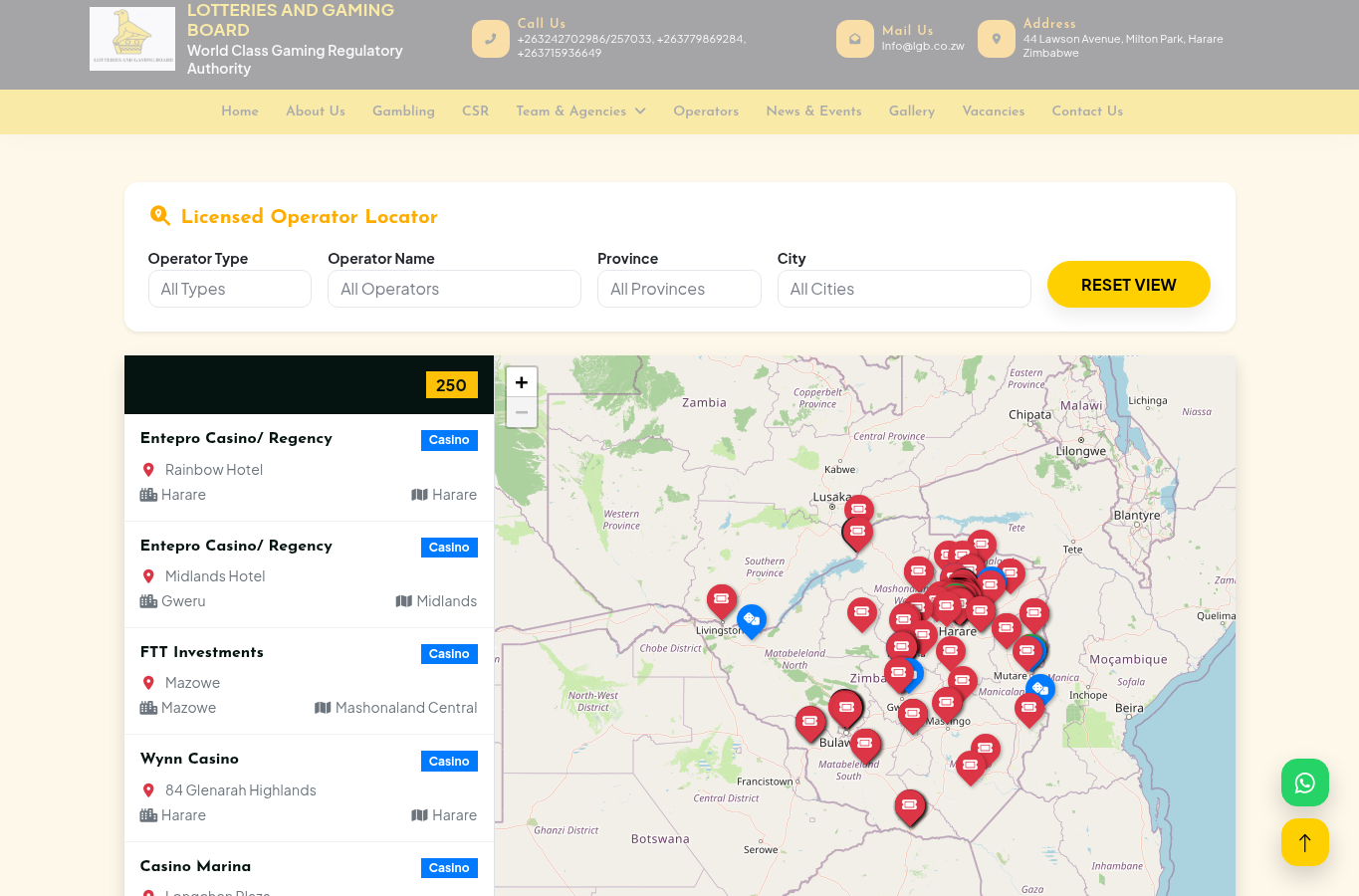
Anyone checking bet247.co.zw from Harare runs into two signals that refuse to agree. A commercial review site carries a detailed write-up of a Zimbabwe-facing betting product, including deposit and payout routes and stated limitations, which reads like proof that everything is settled. The record that would actually settle it does not cooperate: the LGB operator locator, checked on 22 August 2026, lists operator names without publishing the internet addresses they trade under, so nothing in it ties a licence to that host. Neither signal is fabricated. The distance between them is what the grade below is built on.
Where the file splits in two
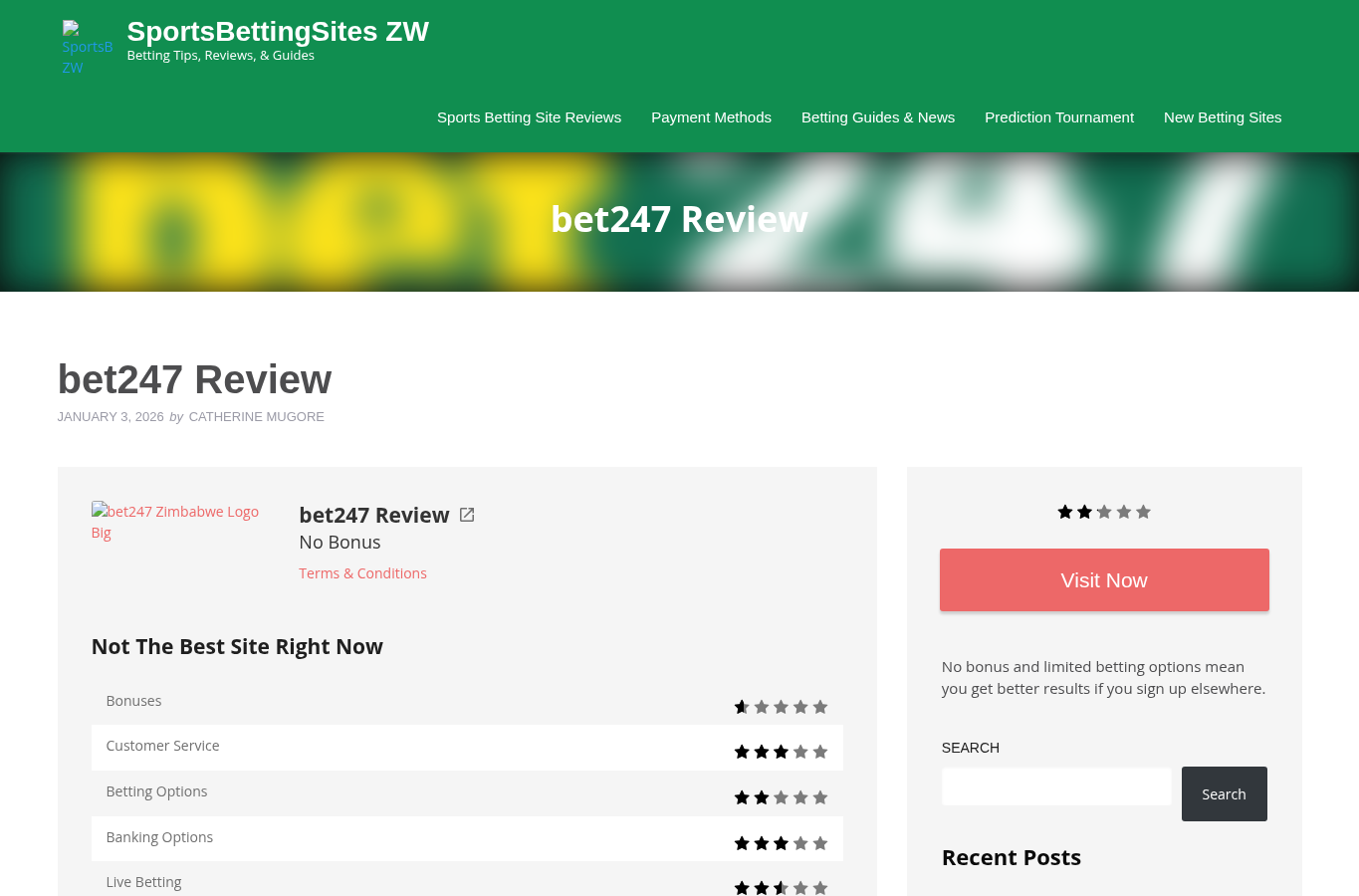
The two records answer different questions. The first is commercial coverage of a Zimbabwe-facing product: it sets out how the sportsbook presents itself, which funding routes it advertises and where it says its limits fall. That is useful colour, and it is why the trading name looks thoroughly documented after one search. It is not a statement from anyone with the power to licence betting in Zimbabwe.
The second is the regulator's own operator locator, checked the same day. It carries operator names. It does not carry the hosts those operators run. A reader can hold both records and still not know whether the address taking a deposit belongs to the licensed company, a reseller, a marketing skin or something with no standing at all.
That is an evidence gap rather than a finding of wrongdoing, and it puts a firm ceiling on the grade.
How the source hierarchy ranks each record
Weighting follows what a record is able to prove, not how confident it sounds. A dated entry from the competent authority outranks everything. An operator's own statement sits below that and stays a claim until it is matched. Coverage published by another commercial site sits below both, because it describes a product rather than certifying it. Unattributed user comments are context and never move a signal alone. The tier labels attached to the supplied set do not line up with the function of these records, so function decides.
| Record | What it is | What it can support | What it cannot support | Checked |
|---|---|---|---|---|
| ZW-S040 | Regulator locator context for the trading name | That the name was looked up in the current locator | Any link between a licence and the exact host | 2026-08-22 |
| ZW-S041 | Commercial third-party write-up | How the product is marketed to Zimbabwean players | Licensing, ownership or payout behaviour | 2026-08-22 |
| Stored brand mark | A local copy of the logo | What the operator calls itself | Legitimacy of any kind | 2026-08-22 |
Exact host and licence match for bet247.co.zw
One question decides everything else: does a licence document name this exact address? Nothing in the accepted set does. The locator names operators without hosts, the commercial write-up names a product without a licence number, and no certificate, expiry date or registered company name has been produced. Until one of those arrives, the accurate word is unmatched, not unlicensed. A reader can close part of the gap without help, and the steps are worth taking before money moves; the standing procedure is set out under how we check licences.
| Checkpoint | Status in the accepted set | How to test it yourself |
|---|---|---|
| Licence number shown on the host | Not recorded | Read the footer and terms, then screenshot with the date visible |
| Registered name of the licence holder | Not verified against a primary record | Ask support in writing for the registered name and licence number |
| Trading name found in the locator | Name looked up; no host published beside it | Search the locator for the exact name support gives you |
| Certificate naming the exact host | Untested | Request the certificate as a file and read the address printed on it |
| Licence expiry | Not supplied | Compare the expiry on that certificate against today's date |
Legal or not, scam or something in between
Zimbabwe treats commercial betting as licensable activity, so the useful question is narrow: does the company behind the address hold a current permission? No adverse official record about this operator sits in the accepted set, so calling it a scam would overstate what anyone has shown. No primary confirmation sits there either, so calling it licensed and safe overstates matters just as badly. Amber is the accurate reading: a live product, real third-party coverage, and no document tying either one to a permission.
In practice, stake nothing you would mind writing off, keep the balance small and withdraw early rather than letting funds accumulate. If betting has stopped being a game, support and limits and self-exclusion do not depend on the licence question at all.
Payment facts we can and cannot stand behind
The third-party write-up describes funding routes and mentions limitations. That is a marketing description captured on one day by another publisher, so no named route is repeated here as fact: none has been confirmed by a competent record or by a documented transaction. What can be offered is a checking routine that holds whatever the cashier displays. Broader market notes on funding accounts sit under payments in Zimbabwe.
| Payment question | Status in the accepted set | Check before you confirm a deposit |
|---|---|---|
| Accepted deposit routes | Described by a third party only | Read the cashier list yourself and screenshot it with the date |
| Merchant name on the payment prompt | Not established | Confirm it matches the company named on the host before approving |
| Deposit and withdrawal fees | Not established | Look for the fee line before confirming, not afterwards |
| Currency and conversion handling | Not established | Send the smallest allowed amount first and read the credited balance |
| Minimum and maximum amounts | Not established | Note the cashier's stated limits and the date you saw them |
Withdrawals and the limits nobody has tested
No payout has been requested, completed and timed for this operator in our files, so no withdrawal window is quoted, and any figure published elsewhere should be traced back to whoever ran the transaction. The protection available is sequencing: verify the account first, request a small withdrawal before a balance matters, and record every timestamp and message. Two patterns deserve attention, because disputes usually start there. One is a document request that appears only once a payout is filed. The other is a bonus condition that converts cash into a wagering obligation. Both are legitimate when disclosed up front and both become a complaint when they surface late, so save the terms you accepted at sign-up as a file.
Identity checks at verification
The accepted set contains no published verification policy for the operator, so its exact document list is an unknown rather than something to be borrowed from the wider market. Expect the usual shape: a photo identity document, proof of address, and proof that the payment instrument belongs to the account holder. Upload only inside the account area or to contacts the operator publishes on the host itself; files sent through a messaging app to someone claiming to be support sit outside any audit trail. Send the single page that answers the request rather than a full bank statement, and log what went where and when. That log is what a regulator or a payment provider will ask to see.
Complaint route if a payout stalls
Escalation works in order, and the order matters more than usual here, because the missing link between host and licence holder means a regulator may first have to establish who runs the address before acting. That step costs time, and dated evidence gathered from day one is what shortens it. Reader cases can be logged through complaints and disputes.
| Step | Where it goes | What to include | Timeline in our records |
|---|---|---|---|
| 1. Written complaint | In-account support on the host | Account reference, amounts, dates, screenshots of cashier and terms | Not established |
| 2. Formal escalation | The complaints contact the operator publishes | The first complaint, its reference and what was refused | Not established |
| 3. Regulator | The LGB, quoting the trading name and the exact host together | Everything above, plus the company details support gave you | Not established |
| 4. Payment provider | Your mobile-money or bank dispute channel | Transaction references and the merchant name on the receipt | Not established |
Clone and look-alike checks before you log in
A trading name with visible commercial coverage and no published address linkage is exactly the profile clones exploit, because a player has no official list to check an address against. Type the host by hand instead of following a paid search result, a shortened link or a forwarded message, and read the spelling character by character before entering login details.
| What to check | Safe pattern | Stop immediately |
|---|---|---|
| Address bar | The exact host on a certificate issued for it | Added words or hyphens, or a different ending |
| Deposit target | A registered merchant or till name | A personal wallet or an individual's number |
| Brand mark | Matches the mark stored locally | Redrawn, stretched or low-quality copy |
| Support channel | Contacts published on the host itself | A number pushed to you in a group chat |
| Login prompt | Reached by typing the address yourself | Reached from a mail asking you to reconfirm details |
Risks, unknowns and what would move the rating
The grade is amber on open evidence, and the reasons are specific. Unknown: the registered name of the licence holder, the licence number, its expiry, the published position on verification and payouts, and whether any dated record connects a permission to the host. Risk: a dispute would begin as an identification problem rather than a payment problem, which is slower and harder for a player to drive.
Green needs two things arriving together, a dated record or certificate from the competent authority naming both the licence holder and the exact host, and one documented payout completed and timed. Red needs an official adverse record, or documented non-payment corroborated across independent cases. Neither exists today and neither will be assumed. Readers who prefer entries where the match is already closed can start from the graded operator list.
Evidence chronology, method and corrections
Every accepted record carries one date, 22 August 2026: the locator context, the commercial coverage and the stored brand mark were all checked that day. A single-day snapshot is a real weakness, because it shows no history of listing, delisting or renewal, so the file is queued for a fresh check rather than treated as closed. How records are weighted is set out in our method and editorial policy.
The same delivery also carried two records belonging to a different Zimbabwe-facing brand, SpinCity: an information site at spincityzimbabwe.com, which names that brand's Zimbabwe-facing address and publishes unattributed user feedback, and the address its stored mark came from, spincity.co.zw/logo.svg. Neither speaks to the operator graded here; both are kept for audit and used only in the SpinCity file.
Corrections are welcome and dated. Send a licence certificate, a locator entry, a payment receipt or a support transcript through contact, and the record set will be re-checked and re-dated, with the signal moved if the evidence carries it.
Frequently asked questions
Is bet247.co.zw licensed in Zimbabwe?
Not confirmed either way. The regulator's operator locator was checked on 22 August 2026 and it does not publish the internet addresses of the operators it names, so no record in the accepted set links a licence to that host. Treat the address as unmatched rather than unlicensed, and ask support in writing for the licence holder's registered name and licence number.
Is bet247 a scam?
Nothing in the accepted evidence supports that word. There is no official adverse record and no corroborated documented case of non-payment. There is also no primary proof of licensing, so the honest position is unproven: a live product with commercial coverage and no document tying it to a permission.
Which payment methods are accepted?
A commercial write-up describes deposit and withdrawal routes, but no method has been confirmed by a competent record or a documented transaction, so none is listed here as fact. Read the cashier yourself, screenshot it with the date visible, and check that the merchant name on your mobile-money or bank prompt matches the company named on the host.
How long do withdrawals take?
Unknown. No payout has been requested, completed and timed for this operator, so no window can be quoted honestly. Request a small withdrawal early, keep every timestamp, and record carefully any document request that appears only after a payout is filed.
What documents will verification ask for?
The operator's published verification policy is not in the accepted set. Expect the standard shape, a photo identity document, proof of address and proof that the payment method belongs to you, and upload only inside the account area or to contacts published on the host, never through a messaging app.
Where can I complain if a withdrawal stalls?
Start with a written in-account complaint, then the complaints contact the operator publishes, then the LGB, quoting the trading name and the exact host together, and your payment provider if money left your wallet. Because no published record links the host to a licence holder, identifying the company may be the first task, which is why dated evidence from day one matters.
Lotteries and Gaming Board of Zimbabwe · ZimLII · Consumer Protection Commission Zimbabwe