Is iLotto Legitimate and Legal in Zimbabwe?

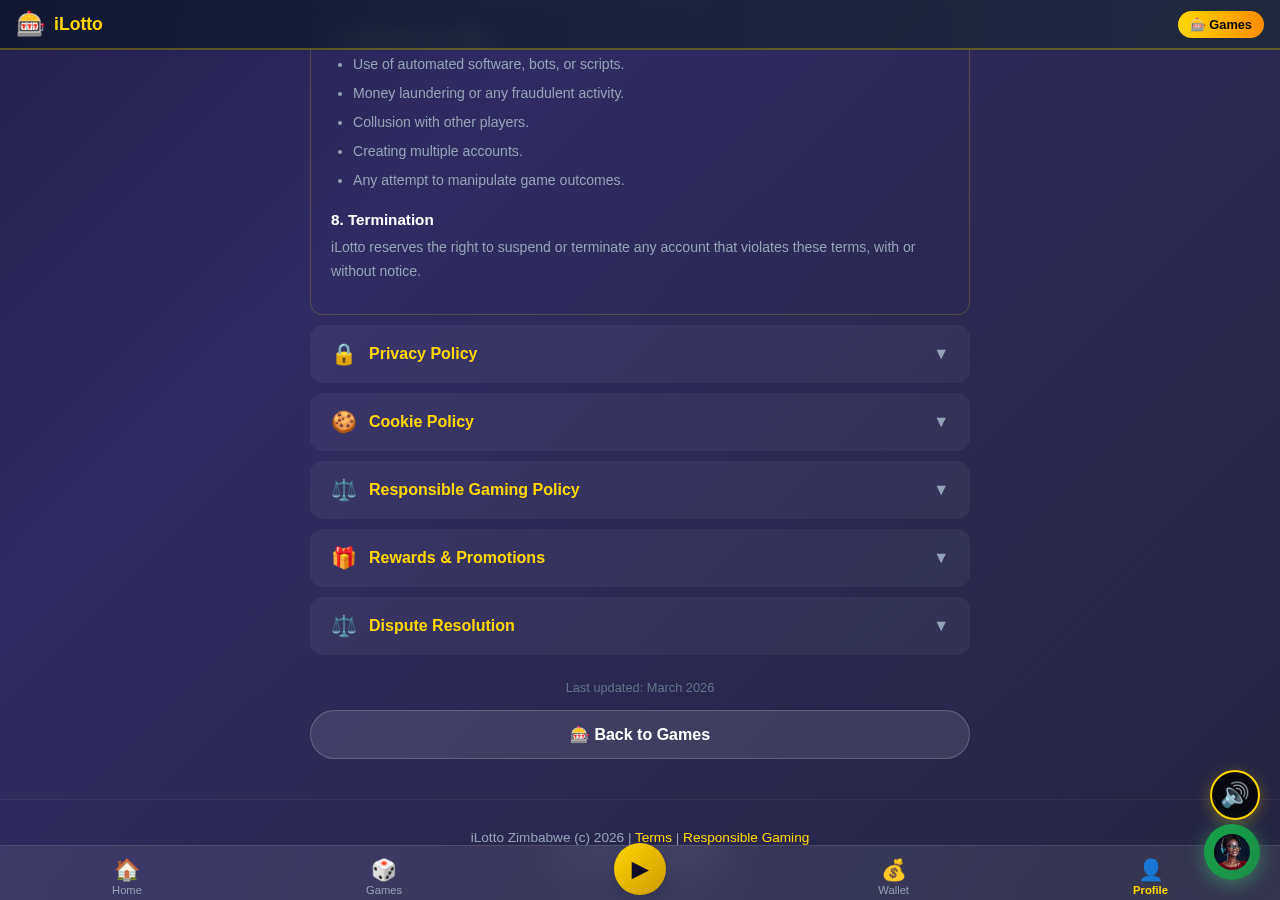
iLotto should not currently be treated as confirmed legal or independently verified for Zimbabwe players. The available evidence is amber: the operator identifies Nashwork Investment Pvt Ltd and claims Zimbabwe gaming-board licensing, but no matching exact-host primary record was established. Its published terms say deposits cannot be withdrawn, KYC is required, and an express withdrawal above a daily limit may attract a 40% charge. Those are operator statements, not proof that a payout or charge has occurred. iLotto is presented as a digital lottery rather than a conventional casino, so the key questions are the exact domain, the responsible entity, the regulator record, and the practical cost of moving money in or out.
What the available record actually establishes
The evidence is narrow and should be read without adding assumptions. A review of the iLotto site records that the operator identifies itself as Nashwork Investment Pvt Ltd and claims Zimbabwe gaming-board licensing. That establishes what the operator says about its identity and regulatory position. It does not independently establish a licence number, a licence covering the precise web host, the current status of any licence, or the legal treatment of every product offered through the domain.
The public Zimbabwe Gaming and Lotteries Board locator was checked for exact brand strings. No Beulabet, iLotto, Zoran, 888 or 22Bet text appeared in the rendered list available on 25 September 2026. This is primary-source evidence about what the locator displayed at that check, but it is not a finding that iLotto is illegal or unlicensed. The locator does not necessarily bind an operator name to a specific online domain, and absent text is not proof of absence.
| Question | What is supported | What remains unknown |
|---|---|---|
| Who operates iLotto? | The site identifies Nashwork Investment Pvt Ltd. | Whether the named entity controls the precise host and whether its details remain current. |
| Is it licensed? | The site claims Zimbabwe gaming-board licensing. | Licence number, category, status, scope and exact-domain connection. |
| Is the product a casino? | The evidence describes iLotto as a digital lottery. | The complete product catalogue and rules for each lottery product. |
| Can a player withdraw? | The terms say deposited funds cannot be withdrawn, while verified winnings can be withdrawn. | Whether a real withdrawal has succeeded, how verification operates and how long payment takes. |
Why the signal is amber rather than green or red
A green assessment would require current primary evidence supporting the precise domain and entity, including a reliable connection to the relevant regulatory record. The supplied material does not provide that connection. The operator’s licensing statement is useful but self-published, and the regulator locator check did not produce an exact iLotto entry.
A red assessment would require an official adverse record or corroborated documented evidence of wrongdoing. Neither is supplied here. The absence of a matching brand string in the locator is not an official adverse finding. Nor do the published terms, by themselves, prove that iLotto has refused a legitimate withdrawal, charged a player 40%, or mishandled funds.
Amber therefore means that important evidence is open or incomplete. It is not a statement that iLotto is fraudulent, and it is not an approval. A player deciding whether to proceed should read the signal as a reason to verify first and limit exposure, not as a prediction about a particular result.
| Signal | Meaning in this assessment | What it does not mean |
|---|---|---|
| Amber | The operator makes a licensing claim, but exact-domain primary confirmation was not established and material payment terms require caution. | It does not prove illegality, fraud, a failed payout or a regulator sanction. |
| Green | Not assigned because current primary evidence does not support the precise domain and entity. | It would not guarantee winnings or remove ordinary financial risk. |
| Red | Not assigned because no official adverse record or corroborated adverse evidence was supplied. | It is not triggered merely by missing locator text. |
Commercial link to a different option; not evidence that the reviewed brand is safe or pays withdrawals.
iLotto is a lottery, not a standard online casino
Calling iLotto a casino can create the wrong expectations. The available description is of a digital lottery. A lottery normally centres on entries or draws rather than the casino games, table games or slot catalogue that users may associate with a casino review. That distinction matters when checking the applicable rules, the operator’s permitted activity and the way balances and prizes are described.
Do not transfer conclusions from another brand to iLotto. The fact that a different operator appears on, or is absent from, a list does not establish iLotto’s position. Likewise, facts about 888, 22Bet or Zoran do not prove anything about iLotto. The relevant checks must concern the exact iLotto host, the entity named by that host, and the product being purchased.
Before creating an account, save the displayed lottery rules and terms with the date and time. Check whether the rules identify the draw, entry cost, closing time, prize conditions, cancellation rules, settlement process and the treatment of an interrupted or changed draw. These details are operational checks, not evidence that the service is licensed.
What the licensing claim does—and does not—show
The iLotto site’s statement that Nashwork Investment Pvt Ltd claims Zimbabwe gaming-board licensing should be recorded as an operator claim. It should not be rewritten as “iLotto is licensed” unless an accepted primary record confirms the relevant licence and its connection to the exact domain.
A careful verification request should seek the legal entity’s full name, licence or certificate number, activity category, issue and expiry dates, and the web domains covered by the permission. If the answer supplies only a logo, a general regulatory reference or an unnumbered claim, that does not resolve the exact-host question. A regulator’s public record should be checked directly, preferably using the entity name and licence details rather than only the consumer-facing brand.
The public locator can be checked through the Zimbabwe operator locator. Its result should be saved as a dated capture or record, because listings can change. Even a positive listing would still need interpretation: the record should be matched to the legal entity, permitted activity and domain rather than assumed to cover every service using a similar name.
| Verification item | Acceptable question | Unresolved if only this is supplied |
|---|---|---|
| Legal operator | Which registered entity is responsible for the exact host? | A brand name without an entity or inconsistent entity details. |
| Permission | What licence or approval number covers the lottery activity? | A general claim that the service is “licensed”. |
| Domain connection | Does the primary record identify or clearly cover the exact host? | A regulator record for an entity with no domain connection. |
| Current status | Was the permission current on the date of checking? | An undated screenshot, old listing or copied badge. |
Deposits are described as non-refundable
The recorded iLotto terms say deposited funds cannot be withdrawn and that only verified winnings can be withdrawn. This is a material risk for a Zimbabwe player. A balance shown inside an account may not represent money that can be returned on request. It may instead be treated under the operator’s rules as funds available only for entries or other permitted use.
That wording should be read before any deposit, not after a dispute begins. Confirm whether the rule applies to unused funds, promotional funds, mistaken deposits, cancelled entries, dormant accounts and an account that cannot pass KYC. The available evidence does not answer those questions. Do not infer a refund right, a minimum withdrawal, a processing time or a successful payout from the existence of a terms page.
Use a payment amount that you can afford to lose if the service does not return the deposited balance. Keep the transaction reference, payment confirmation, account identifier, terms version and any support response. If the payment provider offers a dispute process, that process is not a guarantee of recovery and should not be presented as one.
KYC is required, but the process is not independently tested
The terms require KYC. That means the operator may require identity or other verification before treating winnings as withdrawable. The available evidence does not specify the documents, acceptable formats, review times, reasons for rejection, appeal process or treatment of personal data. It also does not establish whether a particular player has passed or failed verification.
Before depositing, identify the requested documents and check that the name on the account, payment instrument and identity document can be kept consistent. Avoid sending documents through an unverified contact channel. Read the privacy and account rules for storage and disclosure information, and keep a record of what was submitted. A KYC request is not, by itself, evidence of misconduct; it is a condition the operator says applies to withdrawals of verified winnings.
Do not assume that completing KYC guarantees payment. Verification and payout are separate questions. A player may be verified yet still face a dispute about the winning calculation, the draw result, the payment route or the express-withdrawal fee described in the terms.
The 40% express-withdrawal clause needs special caution
The recorded terms say that an express withdrawal over the daily limit incurs a 40% charge. This is unusually important because the wording may affect the amount a player expects to receive. The supplied record also says the precise clause should be verified in a dated capture before publication. It is not independent evidence that the charge has been applied to a real player or that any payout has been made.
Before using an express option, obtain the current wording and ask the operator to state, in writing, the daily limit, the calculation base, the currency, whether the fee applies to the whole withdrawal or only the excess, and whether standard withdrawal is available without that charge. Ask whether the fee is deducted from winnings, added to the requested amount or converted by a payment provider. If the answer is unclear, do not treat the displayed balance as the amount you will receive.
| Term to clarify | Why it matters | Evidence currently available |
|---|---|---|
| Daily limit | Determines when the express condition is triggered. | The existence of a stated limit is recorded; the amount is not. |
| 40% calculation | Determines whether the charge affects the whole request or only an excess. | The recorded terms mention 40%; the calculation is unresolved. |
| Standard alternative | Shows whether a player can avoid the express charge. | No verified process or timing is supplied. |
| Actual outcome | Shows whether the clause was applied and payment completed. | No withdrawal test, user report or payout record is supplied. |
A practical verification sequence for Zimbabwe players
Start with the exact host displayed in the address bar. Record the domain, the legal entity, the terms version and the date. Similar brand names, copied pages or a familiar logo do not establish that the same operator is responsible.
- Read the lottery rules and account terms before funding the account.
- Record the stated legal entity and licensing claim without converting either into an independent fact.
- Check the regulator’s current public locator using the entity and any available licence details.
- Ask support to identify the licence number, activity category, domain connection, KYC documents and withdrawal rules.
- Confirm whether deposits are refundable and how the daily limit and 40% express charge are calculated.
- Save dated copies of the answers, rules and payment confirmations.
- Only then decide whether any deposit is an acceptable risk.
If support gives conflicting answers, treat the conflict as unresolved. Do not rely on a verbal promise that contradicts the published terms unless the operator provides a clear, dated correction and the relevant rules are updated. A player should also avoid increasing exposure simply because money has already been deposited; the non-refundable wording means that the desire to recover a balance can create additional risk.
What is known, what is claimed and what is unknown
Keeping these categories separate prevents a cautious review from becoming either an endorsement or an accusation.
| Category | iLotto assessment | How to use it |
|---|---|---|
| Operator statement | Nashwork Investment Pvt Ltd is identified; Zimbabwe gaming-board licensing is claimed; KYC, non-refundable deposits and the 40% express condition appear in the recorded terms. | Read the statements and verify them; do not present them as independent findings. |
| Primary regulator evidence | The locator was checked and did not display the specified exact brand strings. | Treat it as a dated locator observation, not proof of illegal operation or absent licensing. |
| User evidence | No user allegation, withdrawal test, complaint or payout outcome is supplied. | Do not invent a customer experience or imply one exists. |
| Unknown | Exact licence status, domain binding, payout performance, processing time and practical fee application. | Seek dated primary or directly documented evidence before drawing a stronger conclusion. |
Commercial link to a different option; not evidence that the reviewed brand is safe or pays withdrawals.
Bottom line for a Zimbabwe player
iLotto cannot be confirmed as legally authorised for the precise domain on the available evidence, but it also cannot responsibly be labelled illegal or fraudulent from the absence of its brand text in the regulator locator. The defensible position is amber and open evidence. The service presents itself as a digital lottery, identifies Nashwork Investment Pvt Ltd and claims gaming-board licensing; those claims need primary confirmation.
The financial terms deserve equal attention. Deposits are described as non-refundable, KYC is required for verified winnings, and the terms reportedly include a 40% charge for an express withdrawal above a daily limit. No independent payout evidence or real charge outcome is available. Until the exact host, entity, permission, current terms and withdrawal mechanics are verified, a player should not treat the displayed balance or licensing language as assurance that funds can be recovered.
For related checks, use the internal licence-check guide, the payments guide and the responsible-gambling information. These links provide general context; they do not change the unresolved evidence about iLotto.
Frequently asked questions
Is iLotto legal in Zimbabwe?
The available record does not confirm legality for the precise iLotto host. The operator claims Zimbabwe gaming-board licensing, while no matching exact-host primary record was established. The regulator locator’s missing brand text is not proof of illegality. Verify the entity, licence details, permitted lottery activity and domain connection before depositing.
Is iLotto a casino?
The available evidence describes iLotto as a digital lottery, not a standard online casino. Its rules and regulatory position should therefore be assessed as a lottery service. Do not transfer conclusions about other casino or betting brands to iLotto.
Can iLotto deposits be withdrawn?
The recorded terms say deposited funds cannot be withdrawn and that only verified winnings can be withdrawn. The practical operation of that rule has not been independently tested. Confirm how unused, cancelled or disputed deposits are treated before paying.
What does iLotto’s 40% withdrawal charge mean?
The recorded terms say an express withdrawal above the daily limit incurs a 40% charge. The available evidence does not establish the limit, calculation method or whether the charge has been applied in a real payout. Obtain current written clarification before using express withdrawal.
Does KYC guarantee an iLotto payout?
No. KYC is stated as a requirement, but completing verification would not independently prove that a withdrawal will be processed. The available evidence contains no payout test, processing-time record or verified customer outcome.
Does the missing iLotto name in the regulator locator prove it is unlicensed?
No. The locator observation is limited to the rendered list checked on 25 September 2026 and does not bind operator names to exact web domains. It is a reason to seek more precise confirmation, not proof of absent licensing or illegality.